
Our Story & Place
The Homer Spit & Cook Inlet: The Place Behind Our Fish
The Homer Spit, Cook Inlet, and how a Vancouver fish-market family moved upstream to the source — taking responsibility for the catch right where it lands.
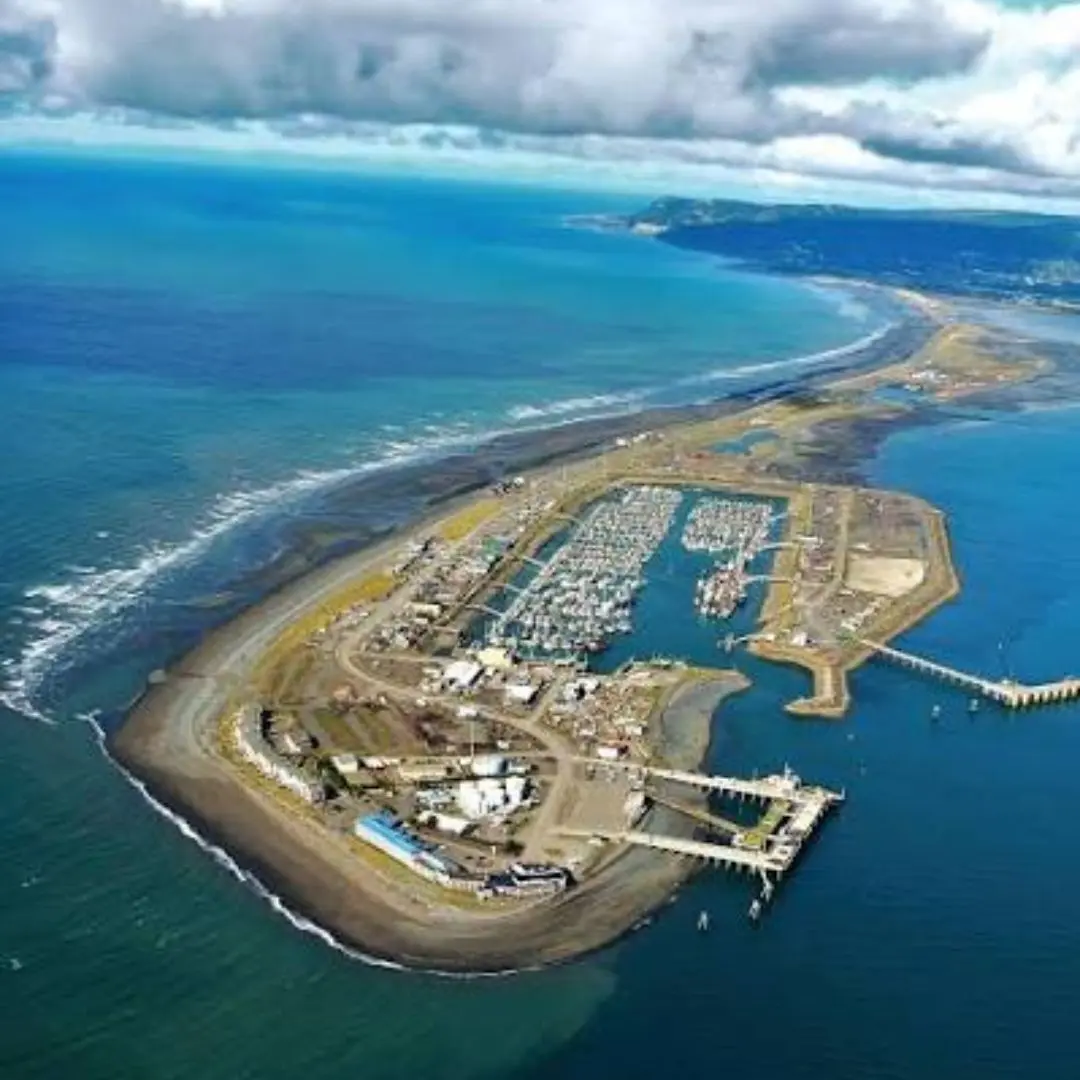
Every fish comes from somewhere. Ours comes from the Homer Spit — a narrow stretch of working waterfront reaching into Kachemak Bay, near the southern end of Cook Inlet. It’s where fishermen, tenders, crews, and buyers all meet the water, and where Alaskan Fish Factory receives and processes wild Cook Inlet sockeye and Homer halibut.
The place doesn’t make the fish good on its own, and a nice view guarantees nothing. But being right on the boats lets us take the catch in fast, keep it cold, and take responsibility for what happens next.
A working waterfront on Kachemak Bay
The Spit runs about 4.5 miles into Kachemak Bay, mountains and glaciers across the water. It isn’t a postcard — it’s a working marine hub: harbors, docks, repair yards, tenders, and crews, side by side. We’re on it at 800 Fish Dock Rd. When a boat or tender ties up, the catch moves straight into receiving — no truck haul from a separate dock to the plant. That closeness only pays off if you’re ready for it, and we work to be.
The fish
Cook Inlet runs strong wild sockeye — Cook Inlet reds — prized for rich color, firm texture, and flavor. Those qualities start with the fish itself: its life, its diet, the water it came from. What happens after — the bleeding, chilling, offload, and processing — either protects that or wastes it.
That’s the whole idea here: we don’t create the quality in the fish. Our job is not to waste it.
Homer is also a serious halibut port, landed across a long season — the through-line that keeps our crew and our buyers busy well beyond the summer sockeye run.
From Vancouver to Homer
Alaskan Fish Factory is the Alaska processing operation of 7 Seas, a family seafood business John Heras founded in Vancouver in 1966 — the flagship market on West 4th in Kitsilano still stands today. What began as a neighborhood fish market grew into restaurant supply, wholesale, import/export, and processing.
For decades, 7 Seas drew heavily on the Fraser River and other river systems across BC, Washington, and Alaska. It still draws from many regions — but Cook Inlet has become one of its most important sources of wild seafood. Taking over the long-term lease and operation of the Homer plant in late 2016 brought the family back to the start of the chain: after decades buying and selling downstream, becoming responsible for the fish right where it’s landed — the handling, the plant, the crew, and the relationships with the people who land it.
Where everyone meets
A dock like this sits between people who depend on one another. Fishermen and tenders bring in the catch. The crew receives it and protects it. Buyers carry it to the people who’ll eat it. Alaskan Fish Factory is the point where those three meet — and there’s a door for each:
- Fishermen & tenders — a reliable home for your catch
- Crew — seasonal and longer-term work on the waterfront
- Buyers — source Cook Inlet sockeye & Homer halibut
The Spit gives this operation its place. The fishermen, crew, and customers give it a reason to be here.